Erick Meyenberg: A National Pavilion With No Price Record Behind It

Updated: Sep 16

Erick Meyenberg works across video, installation, drawing and performance in Mexico City, represented commercially by LS/Galería. He represented Mexico at the 60th Venice Biennale in 2024, selected by open call from the Ministry of Culture and INBAL. As of September 2026, no auction database shows a disclosed sale of his work.
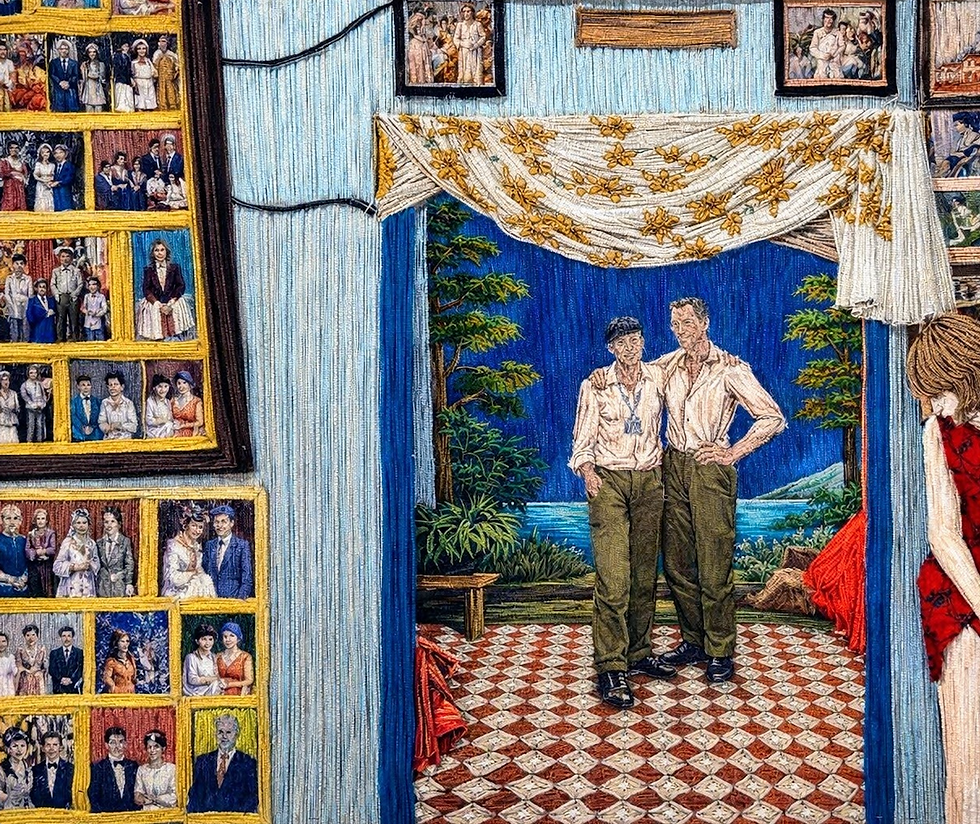
Erick Meyenberg (b. 1980, Mexico City) works across video, installation, drawing, and performance, and remains based in Mexico City. In 2024 he represented Mexico at the 60th Venice Biennale, selected by open call from the Ministry of Culture and INBAL for a video installation curated by Tania Ragasol. The institutional record is state-level and museum-anchored. His solo exhibitions include Museo Tamayo (2021), Museo Amparo, Puebla (2020) — his first U.S. solo — and Americas Society, New York (2017). His work sits in the public collections of MUAC, Museo Tamayo, Museo Amparo, and the Fundación Telefónica. Commercially, he is represented by LS/Galería in Mexico City.
No Public Auction Result Exists
Searches across major auction-result databases return no disclosed sale for Meyenberg's work under any lot description. This is not unusual for an artist whose primary output is video and installation — forms that resist the kind of editioned, resaleable object that typically enters a saleroom — but it leaves a collector with no independent benchmark to test a gallery's asking figure against, and no resale history signalling how the market values the work once it leaves a first buyer. Price, for now, is set entirely by the gallery. Why that absence is the expected finding rather than a warning sign is set out in What Does It Mean When an Emerging Artist Appears at Auction?
A State Pavilion, A Modern-Masters Gallery
LS/Galería's roster centres on secondary-market-established modern Mexican artists — Tamayo, Carrington, Cuevas, Soriano — alongside a small number of living names, of which Meyenberg is one. It reads as a program built for collectors acquiring blue-chip inventory, not one structured to cultivate a resale market for a still-developing career. Selection to a national pavilion is a curatorial judgment, not an art market one. Museums acquire; collectors hesitate. The infrastructure that would normally convert institutional attention into sustained buying — dedicated fair placements, disclosed pricing, a resale track record — is not yet visible around this artist specifically.
Can a State Selection Convert to Collector Demand?
Mexico's Biennale selection rewards conceptual and curatorial merit, not commercial traction, and Meyenberg's practice leans toward large, research-driven, often site-specific installation — work museums are built to acquire and that private collectors are structurally less equipped to hold, transport, or resell. Whether a credential of this scale eventually pulls collector demand toward his work, or whether the market simply treats it as a separate, non-transferable form of validation, is not yet answered by the record. That is the open question a collector is being asked to price.
The gallery has an interest in the sale. The auction house has an interest in the estimate. This report has neither.
A full Artist Career Trajectory Report on Erick Meyenberg examines thirteen analytical dimensions independently — from institutional selection and gallery structure through market infrastructure, publication coverage, and auction establishment — and delivers a single rating with a structured risk assessment, based on a proprietary analytical methodology. The report gives you the complete picture, not the highlights.