Nathanaëlle Herbelin: A Two-Lot Auction Record Behind a Musée d'Orsay Solo

Updated: Sep 24

Nathanaëlle Herbelin paints in oil in Paris, represented by Jousse Entreprise and Xavier Hufkens. Her solo presentation opened inside the Musée d'Orsay's own Nabis galleries, alongside Bonnard and Vuillard. As of September 2026, her disclosed auction record runs to two lots at Phillips, both sold well above estimate.
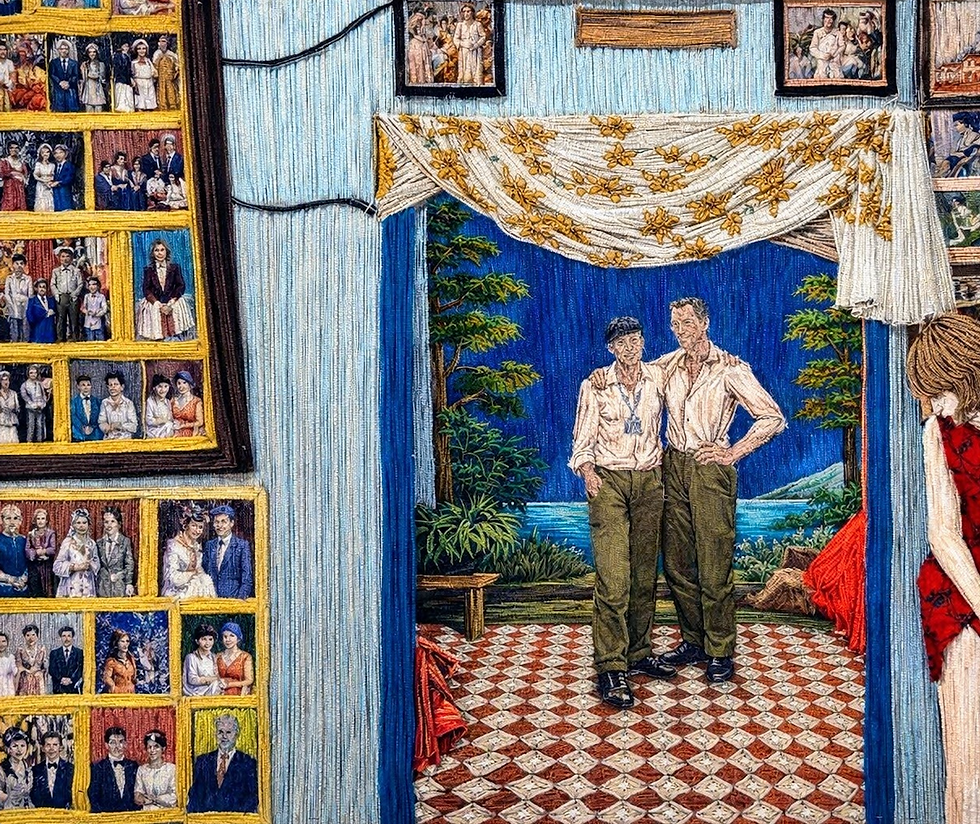
Nathanaëlle Herbelin (b. 1989, Tel Aviv) painted her way from a 2016 graduation at the École Nationale Supérieure des Beaux-Arts de Paris to a solo presentation at the Musée d'Orsay in under a decade, hung inside the museum's own Nabis galleries alongside Bonnard, Vuillard and Vallotton. Paris-based since 2011, she works in oil, painting domestic interiors and portraits of family, friends and strangers. She is represented by Jousse Entreprise in Paris and Xavier Hufkens in Brussels, and followed the Orsay show with a 2025 solo at China's He Art Museum. Her work sits in the Stedelijk Museum and the Musée d'Art Moderne de la Ville de Paris. Few painters this early into a career are given a room inside a museum's own historical collection.
A Two-Lot Record, Both Above Estimate
Herbelin's auction history runs to two disclosed lots, both at Phillips in London. Max sold for £57,150 against a £25,000–35,000 estimate in March 2025 — The Art Newspaper reported it as a fresh auction record for the artist — and Paxos later sold for £10,965 against a £4,000–6,000 estimate. What a first or second auction result can and cannot establish is examined separately in What Does It Mean When an Emerging Artist Appears at Auction? Both cleared their high estimate by a wide margin, telling a collector two things at once: demand exists beyond the gallery waiting list, and there isn't yet enough volume to say where a fair price sits. For now, the gallery sets the price. The saleroom has only confirmed that when a work appears, buyers pay more than expected.
Why Two Lots Isn't Yet a Market
The gap here is not that collectors are unconvinced — the two auction results argue the opposite. It is that there is barely enough supply to test conviction against. Herbelin paints slowly and in oil, and her primary-market prices are set by two galleries with long waiting lists. A museum acquiring a canvas and a collector securing one from a gallery list are different transactions on different timelines, and neither produces the repeat resale activity that lets a market settle on its own opinion of value. The institutions have moved fast. The trading volume that would let an outside collector triangulate a price has not caught up.
Momentum or Outlier?
Two results, both well above estimate, could be the first sign of a floor forming beneath Herbelin's gallery prices. They could equally be what a small, scarce body of work produces when two motivated bidders want the same painting on a given night. The run of institutional attention since the Orsay show happened quickly — faster than most painters see this kind of recognition arrive. Whether that speed reflects a settled critical consensus or an early enthusiasm still building its case is the question a collector has to answer alone, because the market hasn't yet generated enough transactions to answer it for them.
The gallery has an interest in the sale. The auction house has an interest in the estimate. This report has neither.
A full Artist Career Trajectory Report on Nathanaëlle Herbelin is available now — institutional standing, market position, and risk assessment, based on independent due diligence.